
Water Damage
Home / Water Damage
Water Damage Public Adjusting for Residential and Commercial Claims
If you are dealing with water damage, hiring Disaster Adjusting can help you build a stronger, more complete insurance claim from the start. Water losses often look smaller than they really are. What begins as a pipe break, appliance leak, or ceiling stain can quickly involve hidden moisture, damaged insulation, flooring issues, contents loss, drying equipment, and repairs that expand once materials are opened up. Disaster Adjusting provides water damage public adjusting services for homeowners and commercial property owners who need experienced claim support when water damage interrupts their property and their routine.
A water damage public adjuster works for you, not the insurance company. That matters when your claim involves policy questions, hidden water damage, competing estimates, mitigation costs, or a settlement that does not reflect the full scope of loss. Disaster Adjusting helps review the policy, inspect visible and hidden moisture damage, organize the claim, document affected materials and contents, and work toward a settlement that reflects the actual cost to dry, repair, replace, and recover.
This service is for:
– Homeowners dealing with burst pipe insurance claims
– Property owners facing water leak insurance claim issues
– Families with ceiling water damage, flooring damage, or hidden moisture concerns
– Commercial property owners handling a commercial water damage claim
– Landlords, multi-property owners, and business owners with active water loss or delayed damage
– Policyholders who need help understanding water damage insurance coverage
Common problems we help solve include:
– Hidden moisture that was not fully inspected
– Water mitigation work that is only partially addressed
– Low or incomplete repair estimates
– Contents damage that is missed or undervalued
– Questions about endorsements, exclusions, and water-related coverage
– Supplemental claims after more damage is discovered
– Delays, confusion, and difficult carrier communication
Why choose Disaster Adjusting? We bring residential and commercial claim experience, policy knowledge, moisture-related loss experience, and decades of insurance claim background to the process. Our team understands that water losses can spread beyond what is visible and that proper inspection, documentation, and claim handling can make a meaningful difference in the outcome.
If you need water damage claim help now, call Disaster Adjusting at (888) 675-0911. Use the Contact Us page to request a claim review and find out what your water damage insurance claim should really include.
What Does a Public Adjuster Do During a Water Damage Claim?
A public adjuster helps the policyholder prepare, document, and pursue the water damage insurance claim with a focus on what the property actually needs. After a water loss, most owners are trying to stop further damage, coordinate mitigation, understand what the policy covers, and respond to insurance requests at the same time. Disaster Adjusting steps in to help manage that process in a more organized and informed way.
During a water damage claim, our role may include:
– Reviewing the insurance policy
Water claims often turn on details in the policy. We review coverages, exclusions, endorsements, duties after loss, deductibles, and claim conditions that may affect the outcome.
– Identifying covered damage
Not every water event is handled the same way under an insurance policy. We help identify which parts of the loss may be covered and what documentation will matter most.
– Inspecting visible and hidden moisture damage
Water does not always stay where the leak started. It can spread behind walls, under flooring, into insulation, cabinetry, subfloors, and adjacent rooms. A proper inspection should address both visible damage and hidden moisture.
– Preparing a detailed scope of loss
A strong claim needs more than a rough number. We help define what was affected, what needs drying, cleaning, repair, or replacement, and what supporting evidence ties that work back to the loss.
– Reviewing estimates
Mitigation and repair estimates do not always capture the full damage. We review available estimates for missing items, incomplete drying scope, low pricing, and repair assumptions that do not match the actual condition of the property.
– Supporting supplemental claims
Water losses often expand after demolition, drying, or moisture mapping reveals more affected materials. We help support supplemental requests when the original estimate falls short.
– Documenting contents damage
Water can affect furniture, electronics, inventory, documents, clothing, and business property. We help organize the contents portion of the claim so it is easier to support.
– Assisting throughout the insurance claim process
From the first inspection to final resolution, we help keep the claim organized, supported, and moving forward.
Should you hire a public adjuster for a water damage claim? If the damage is significant, the moisture spread is unclear, the estimate feels incomplete, or the process is becoming difficult to manage, the answer is often yes. When should you hire one? The earlier the better, but help can still be valuable after mitigation starts, after a low estimate, or after additional hidden damage is discovered.
In practical terms, a public adjuster helps turn a confusing water loss into a documented insurance claim. That matters when the damage involves hidden moisture, drying equipment, structural materials, contents, or policy questions that can affect the value of the claim.
What Common Events Cause Water Damage Insurance Claims?
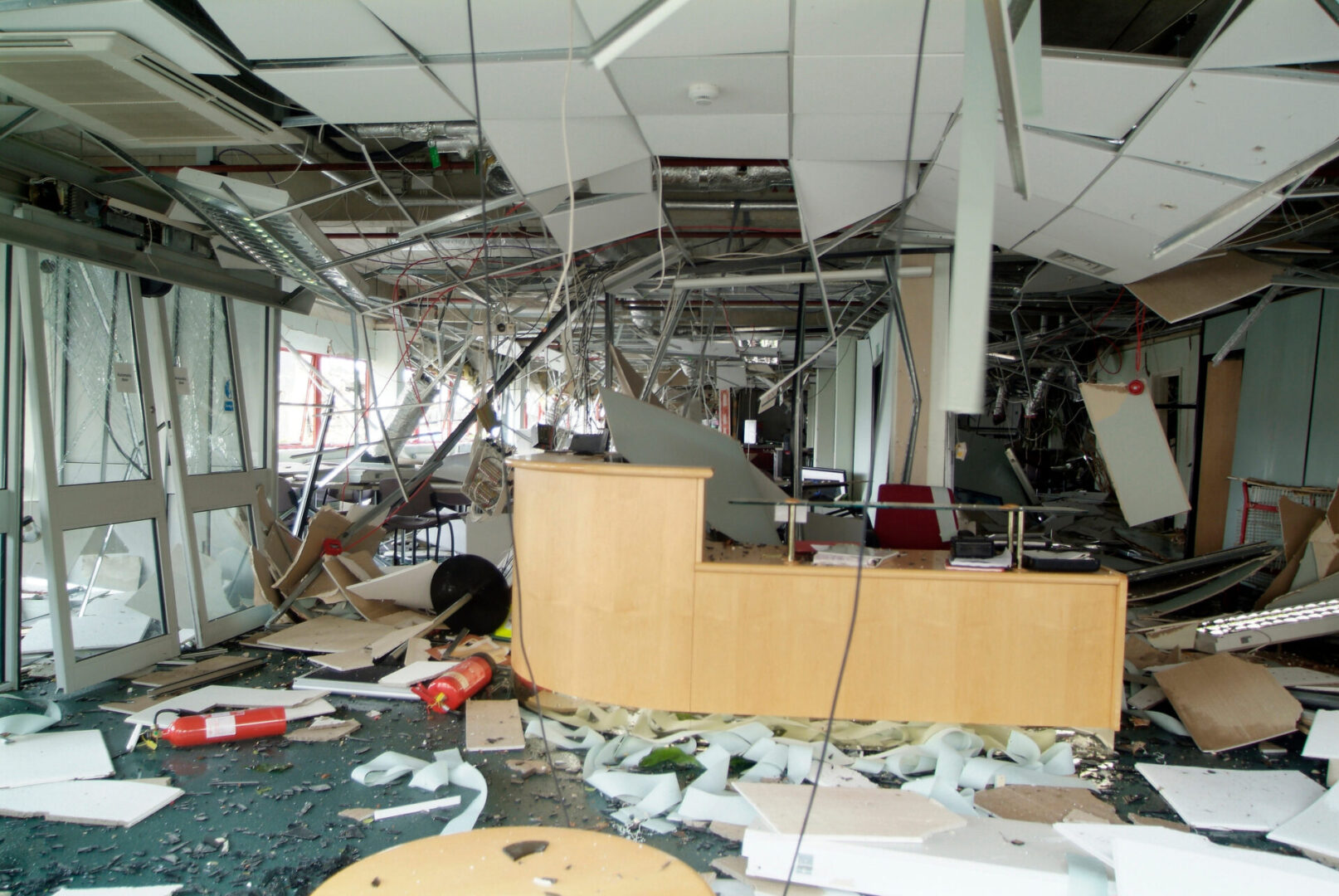
Water damage insurance claims often begin with a sudden and accidental release of water, but the source can vary widely. What matters is not only where the water came from, but how quickly the damage spread and how well it was documented. Many losses that start small can become much larger claims once moisture moves into surrounding materials and hidden areas.
Common causes of water damage insurance claims include:
– Burst pipes
A burst pipe can release a large volume of water quickly and affect walls, ceilings, flooring, cabinetry, insulation, and contents.
– Frozen pipes
Frozen pipes may crack or split and create serious water damage once temperatures rise and water flow returns.
– Appliance failures
Water-supplied appliances can leak gradually or fail suddenly, damaging nearby finishes and hidden building materials.
– Water heater failures
A failed water heater can release water across multiple rooms or levels, especially if the leak is not discovered immediately.
– Dishwasher leaks
Dishwasher lines, seals, and drain issues can lead to cabinet damage, subfloor moisture, and hidden water behind adjacent finishes.
– Washing machine supply line failures
Supply line failures are a common cause of major residential water losses because they can release water quickly and continuously.
– Refrigerator water line leaks
Small line failures behind a refrigerator can go unnoticed and create long-term hidden water damage behind walls and under flooring.
Water entry from the roof can affect ceilings, insulation, framing, drywall, and interior finishes, especially during repeated rain events.
– Ice dams
Ice dams can force water back under roof materials and into the structure, leading to ceiling stains, insulation damage, and hidden moisture.
– Overflowing sinks
An overflowing sink can damage cabinets, flooring, baseboards, and nearby rooms if the water travels beyond the original area.
– Overflowing tubs
Bathtub overflows often affect bathrooms, adjacent rooms, and lower levels through ceilings and wall cavities.
– Toilet overflows
Toilet overflows can create both water damage and contamination concerns, depending on the source and duration of the overflow.
– HVAC condensate line failures
Condensate drain issues can cause hidden water damage in utility areas, ceilings, wall cavities, and around air handling equipment.
– Storm-related water intrusion
Severe weather can allow water into the property through roof damage, compromised siding, broken windows, or other storm-created openings.
– Fire suppression water damage
Water used to extinguish a fire can create a second major loss involving structural materials, contents, and hidden moisture throughout the property.
Many water claims involve sudden and accidental damage, but not every water source is handled the same way under a policy. Coverage questions can become more complex with sewer backup, outside drain issues, or flooding, which may require different endorsements or separate coverage. That is why the source of the water, the path it followed, and the resulting damage all need to be documented carefully.
Disaster Adjusting helps property owners evaluate the cause of loss, inspect the damage thoroughly, and build a clearer claim when water has affected the home, business, or commercial property.
What Water Damage Is Typically Covered by Insurance?
Water damage is often covered by insurance when the loss is sudden and accidental, but coverage always depends on the policy language, endorsements, exclusions, and facts of the event. That is the most important point to understand. A property owner should not assume that all water damage is covered or that all water losses are excluded. The correct answer usually comes from reviewing how the policy treats the specific source of the water and the resulting damage.
Water damage that is often covered, depending on the policy, may include:
– Sudden and accidental water damage
– Burst pipes
– Appliance failures
– Accidental plumbing leaks
– Fire suppression water damage
– Roof damage caused by covered events that allows water intrusion
For example, a burst pipe in a wall, a failed washing machine supply line, a leaking water heater, or water used to extinguish a fire may fall within common property coverage scenarios if the loss was sudden and accidental. Roof-related water damage may also be part of the claim when a covered event, such as wind or hail, damages the roof and allows water into the structure. In many cases, the resulting damage to ceilings, walls, flooring, insulation, and contents becomes just as important as the source itself.
At the same time, common exclusions or limitations may involve:
– Flood damage
– Groundwater intrusion
– Long-term leaks
– Neglected maintenance
– Sewer backup unless a separate endorsement exists
Flood damage is often handled separately from standard property coverage. Groundwater and water entering from outside sources may also be treated differently. Slow or ongoing leaks can trigger disputes if the carrier argues the damage developed over time rather than from a sudden event. Maintenance-related issues, wear and tear, or conditions the insurer views as neglected may also reduce or defeat coverage. Sewer backup is another area where many property owners are surprised, because it often requires specific added coverage rather than standard policy language alone.
That is why broad assumptions can create problems. Two water losses may look similar at first but be treated differently because of the source, the timing, the endorsements attached to the policy, or the documentation available. Disaster Adjusting helps policyholders review the policy, identify the parts of the water loss that may be covered, and organize the claim around the actual language and damage rather than guesswork. If you are dealing with a burst pipe insurance claim, a water leak insurance claim, or another sudden water event, a careful policy review is one of the most important first steps.
What Hidden Water Damage Do Insurance Estimates Often Miss?
Hidden water damage is one of the most common reasons a water damage insurance claim becomes incomplete. Water rarely stays in one visible area. It moves through materials, follows gravity, spreads sideways, and settles into concealed spaces that may not show obvious damage during the first inspection. If those hidden areas are not identified early, the estimate may be too low and the property may continue to deteriorate after the initial claim review.
Hidden water damage often appears:
– Behind drywall
– Under flooring
– In subfloors
– Inside cabinets and built-ins
– In insulation
– In attics
– In crawl spaces
– In HVAC systems
– Around electrical components
– In structural framing
– Through wider moisture migration into adjacent rooms or levels
A ceiling stain or warped baseboard may only be the visible sign of a larger moisture path. Behind drywall, water can affect framing, insulation, fasteners, and interior finishes that cannot be seen without testing or selective opening. Under flooring, moisture may spread into padding, underlayment, adhesives, and subfloors. Cabinets often trap water in toe kicks, backs, and enclosed spaces where swelling and material breakdown continue after surface drying appears complete.
Attics and crawl spaces can also hold hidden moisture after roof leaks, plumbing failures, or condensation-related issues. HVAC systems may be affected when water reaches ducts, air handlers, nearby insulation, or mechanical compartments. Electrical components deserve close attention as well, especially where water has entered wall cavities, ceilings, or utility spaces. Structural framing can absorb moisture and remain wet longer than surface materials, which raises the risk of ongoing deterioration if it is not identified and dried properly.
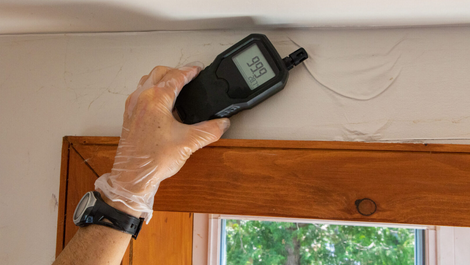
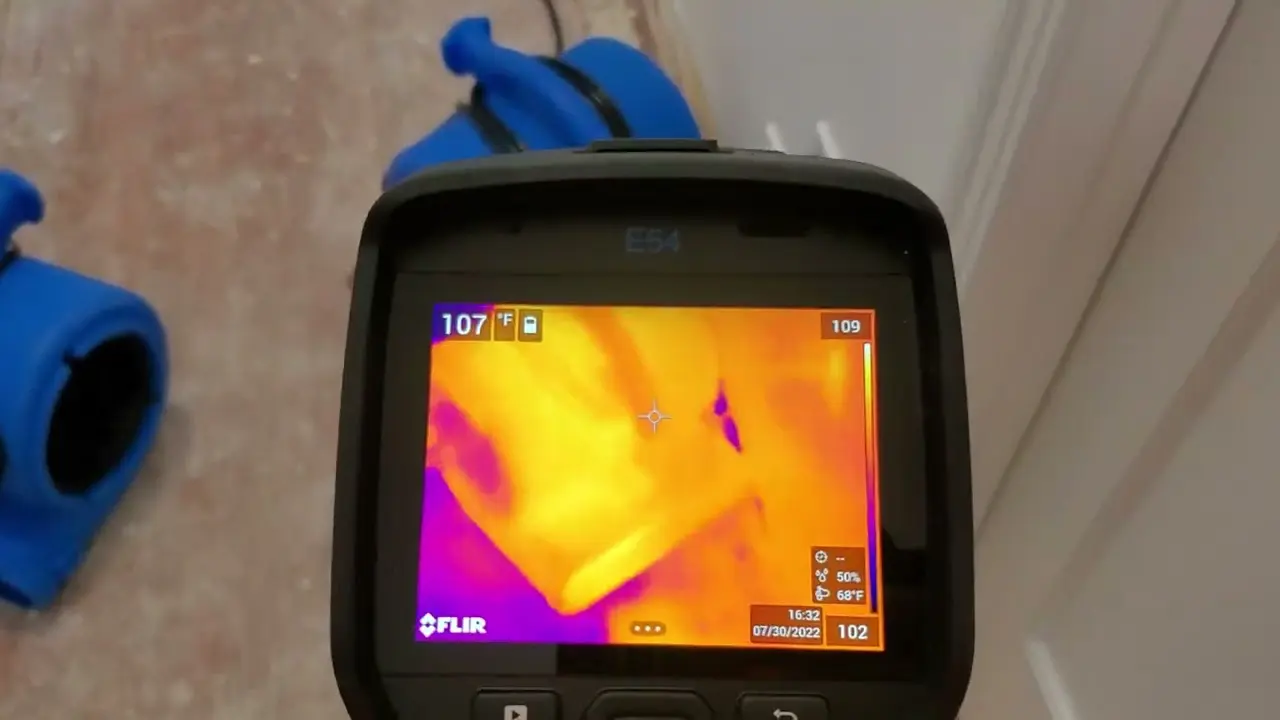
This is where moisture detection equipment becomes especially important. Thermal imaging, moisture meters, and related inspection tools help identify water that may not be visible during a standard walkthrough. Disaster Adjusting’s site specifically notes the use of thermal moisture meters and equipment to locate moisture, identify the source of damage, and find additional damage that is not visible. Moisture mapping services are also part of the company’s broader inspection approach.
A more complete inspection helps connect visible damage to the full moisture spread. Disaster Adjusting helps property owners document hidden water damage so the claim addresses the real scope of affected materials, drying needs, repair work, and supplemental issues that often surface later when concealed damage was missed the first time.
What Does the Water Damage Insurance Claim Process Look Like?
The water damage insurance claim process usually moves through a series of steps, but the quality of the outcome depends on how well each stage is handled. Water losses can spread quickly, and some of the most important damage is not obvious during the first few hours. A clear process helps protect the property, preserve evidence, and build a stronger claim.
Visual timeline
Water loss occurs
↓
Stop the source if possible
↓
Emergency mitigation
↓
Notify insurance
↓
Inspection
↓
Moisture mapping
↓
Documentation
↓
Estimate review
↓
Settlement
↓
Repairs
↓
Supplemental claims
Water loss occurs
The leak, burst pipe, overflow, roof intrusion, or other water event begins damaging the property. Best practice is to note when the loss was discovered and begin documenting conditions as soon as it is safe.
Stop the source if possible
Shut off the water, isolate the appliance, or take other reasonable steps to prevent additional damage. If the source cannot be stopped safely, call the appropriate emergency help right away.
Emergency mitigation
Mitigation may include water extraction, temporary containment, removal of saturated materials, dehumidification, air movement, and other drying measures. A common challenge is that mitigation begins before the full claim scope is understood, so records and photos matter.
Notify insurance
The loss is reported to the carrier. Accuracy is important, but it is also important not to guess at the entire extent of damage before a proper inspection is completed.
Inspection
The property is inspected for visible damage and the likely path of moisture. A challenge at this stage is that surface conditions may not reveal everything that is wet or affected.
Moisture mapping
Moisture mapping helps identify hidden water spread in walls, floors, ceilings, and other concealed areas. This step can make a major difference when the initial visible damage is only part of the story.
Documentation
Photos, measurements, readings, mitigation records, affected materials, contents damage, and repair needs should be organized clearly. Good water damage documentation helps support both the immediate loss and any later supplemental needs.
Estimate review
The estimate should be reviewed carefully for omitted drying work, hidden moisture, incomplete material removal, low pricing, missed contents, or repair assumptions that do not match the actual condition of the property.
Settlement
A payment is issued based on the covered damage recognized at that point in the claim. Property owners should understand what the payment includes and whether additional review may still be needed.
Repairs
As drying, demolition, and reconstruction move forward, more affected materials may be discovered. That is common in water claims because hidden moisture often appears once surfaces are opened.
Supplemental claims
If additional covered damage is found, the claim may need to be supplemented. This is a normal part of many water losses when the original estimate did not capture the full moisture migration.
Disaster Adjusting helps policyholders through each stage by reviewing the policy, documenting the water loss carefully, evaluating mitigation and repair estimates, and supporting supplemental claims when the original scope falls short. A well-managed water damage claim is not just about responding quickly. It is about making sure the claim reflects the full condition of the property after the loss.
What Is Included in a Water Damage Insurance Claim?
A water damage insurance claim can include much more than the area where the leak or overflow first appeared. Water moves into surrounding materials, concealed spaces, and personal property, and the claim should reflect what it actually takes to dry, clean, repair, and restore the property. The exact scope depends on the policy and the facts of the loss, but a complete review should look at all affected building materials, systems, contents, and related expenses.
A water damage claim may include:
– Drywall
Wet drywall often needs testing, drying, removal, repair, or replacement depending on how long it was exposed and how far the moisture spread.
– Flooring
Carpet, pad, hardwood, laminate, tile assemblies, and other flooring materials may all be affected differently by water.
– Cabinets
Cabinet boxes, toe kicks, backs, shelving, and nearby built-ins can absorb water and continue deteriorating even after the visible surface appears dry.
– Trim
Baseboards, door casings, crown, and other finish trim may swell, stain, warp, or require removal during drying and repair.
– Insulation
Insulation in walls, ceilings, attics, and crawl spaces may hold moisture and lose effectiveness if it is not addressed properly.
– Painting
Stained, repaired, or replaced surfaces often require repainting to return the area to a uniform, finished condition.
– Electrical systems
Outlets, wiring, fixtures, panels, or connected components may need evaluation if water entered walls, ceilings, or utility areas.
– HVAC
Water damage may affect ductwork, air handlers, nearby insulation, or other mechanical components depending on the source and spread.
– Contents
Furniture, electronics, clothing, documents, tools, inventory, and other personal or business property may be damaged by direct water exposure or prolonged moisture.
– Water mitigation
Emergency extraction, stabilization, containment, and drying efforts are often a major part of the claim.
– Drying equipment
Air movers, dehumidifiers, containment systems, and related equipment may be necessary to reduce moisture and prevent further damage.
– Demolition
Removal of wet drywall, flooring, insulation, cabinets, or other unsalvageable materials may be required to access hidden moisture and begin repairs.
– Cleaning
Cleaning may include structural cleaning, content cleaning, odor control, and treatment of areas affected by dirty water or prolonged dampness.
– Temporary repairs
Temporary plumbing work, roof protection, containment, and other short-term measures may be needed to stop further damage.
– Additional Living Expenses
If the home is not livable, the claim may include temporary housing and related extra costs depending on the policy.
– Business interruption
In commercial claims, operational downtime, lost income, or extra expense may also become part of the loss.
Many property owners focus first on the obvious water stain or damaged floor, but that is only one part of the picture. Disaster Adjusting helps organize the full water damage claim so the scope reflects the building materials, contents, mitigation work, and related expenses needed for a more complete recovery.
Why Can Water Damage Keep Spreading After the Initial Loss?
Water damage can continue to spread long after the initial leak or overflow because moisture does not stay confined to one visible spot. It moves through materials, settles into concealed spaces, and keeps affecting the property until the source is stopped and the moisture is properly addressed. That is why a small visible water issue can become a much larger claim if mitigation is delayed or the hidden spread is underestimated.
Several factors allow water damage to keep spreading:
– Moisture migration
Water follows gravity, but it can also move laterally into adjacent rooms, under flooring, behind walls, and into lower levels. The wet area you can see is often smaller than the full affected area.
– Capillary action
Building materials such as drywall, wood, insulation, and trim can draw moisture upward or sideways. This means water can wick into materials beyond the original source and keep spreading after the leak has stopped.
– Hidden moisture
Water often becomes trapped in wall cavities, subfloors, cabinetry, ceiling assemblies, attics, and crawl spaces. Those concealed areas may stay wet even when surface materials feel dry.
– Secondary damage
Once water reaches surrounding materials, it can affect paint, adhesives, flooring systems, cabinetry, insulation, and electrical areas that were not part of the original leak point.
– Material deterioration
Wood can swell, engineered flooring can delaminate, drywall can soften, metal can corrode, and finishes can fail as moisture remains in place.
– Microbial growth risks
Prolonged dampness can increase the risk of microbial growth, especially in porous materials and enclosed spaces. The longer wet materials remain untreated, the more complicated the cleanup and repair process can become.
This is why immediate mitigation matters. Quick water extraction, drying, dehumidification, and moisture detection can help reduce the spread and limit the amount of demolition and reconstruction required later. Disaster Adjusting’s site emphasizes the importance of using proper moisture meters and related equipment to locate the source of damage and identify moisture that is not visible. That kind of inspection is essential because surface drying alone does not always address the full problem.
In practical terms, the initial loss is often only the first stage. Without timely mitigation, a plumbing leak, overflow, or roof-related water intrusion can lead to hidden water damage, broader material failure, and a more expensive claim. Disaster Adjusting helps property owners document not only the visible damage, but also the continuing moisture spread that can change the scope of loss over time.
How Do Residential Water Damage Claims Affect Different Types of Homes?
Residential water damage claims can affect nearly every type of living space, and the scope often depends on how the property is built, where the water traveled, and how quickly the issue was discovered. Whether the loss occurs in a detached house or a shared-wall property, the claim should reflect both the visible damage and the less obvious moisture spread.
Residential water damage claims may involve:
– Single-family homes
In a single-family home, water can affect multiple rooms, levels, attics, crawl spaces, garages, and personal property at the same time. Pipe breaks, appliance leaks, roof leaks, and overflows often spread beyond the original point of loss.
– Condominiums
Condo water claims can be more complicated because ownership responsibilities may be split between the unit owner and the association. Walls, ceilings, shared systems, and neighboring units can all become part of the situation.
– Townhomes
Townhomes may present similar challenges, especially where shared walls, attached roofs, or connected utility systems make the source and extent of damage harder to separate.
– Apartments
Apartment-related losses may involve more than one unit, common areas, ceilings below, and tenant contents. Even when the affected party is not the owner, the building damage and personal property damage may both need documentation.
– Finished basements
Finished basements are especially vulnerable because water often settles there after plumbing failures, seepage, or storm-related intrusion. Flooring, drywall, trim, insulation, furnishings, and stored contents can all be affected quickly.
– Garages
Garages may contain water heaters, supply lines, utility sinks, appliances, and stored property, making them common starting points for residential water losses.
– Detached structures
Sheds, workshops, detached garages, and accessory buildings can also suffer water damage and should not be overlooked if they are insured under the policy.
– Personal property
Furniture, electronics, clothing, documents, tools, décor, and stored household items may all be part of the residential contents claim, especially when the water spread across rooms or levels.
One of the biggest issues in residential water damage claims is that the focus stays too narrow. A homeowner may receive an estimate for one ceiling or one section of flooring while moisture has already moved into adjoining materials, cabinetry, insulation, or contents. By the time the full spread becomes obvious, the claim may need to be supplemented.
Disaster Adjusting helps homeowners, condo owners, landlords, and residential property owners document the broader impact of the water loss across the property. A complete residential water damage claim should reflect the structure, the affected systems, the personal property, and the real work required to dry and restore the home properly.
What Makes Commercial Water Damage Claims More Complex?
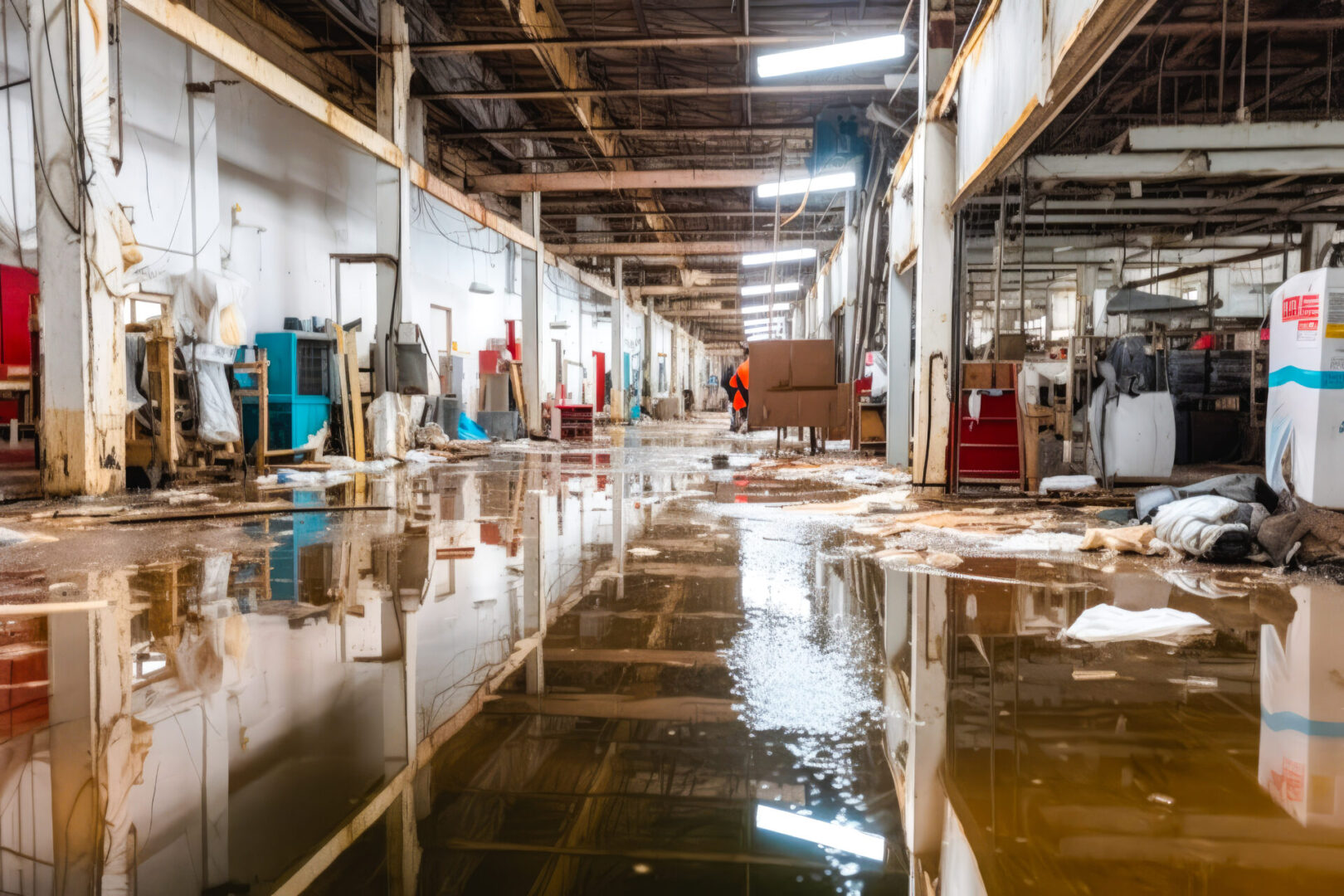
Commercial water damage claims are often more complex because the loss can affect the building, the contents, the equipment, and the business operation at the same time. A water event in a commercial property may involve multiple units, specialized systems, tenant concerns, inventory exposure, and downtime that continues long after the visible water is gone. That is why a commercial water damage claim needs a broader and more detailed review than a simple surface inspection.
Commercial water damage claims often involve:
– Office buildings
Water can affect ceilings, walls, flooring, electrical systems, shared corridors, tenant suites, records, and office equipment across multiple areas.
– Retail
Retail spaces may face damage to floors, displays, stock, point-of-sale systems, customer areas, and storefront interiors, along with pressure to reopen quickly.
– Warehouses
In warehouse losses, the water may damage inventory, packaging, racking areas, loading zones, and large floor areas where moisture spread is not obvious at first.
– Manufacturing facilities
Water can affect production lines, specialized machinery, raw materials, finished goods, utility systems, and work areas that are difficult to shut down without major disruption.
– Restaurants
Restaurants face additional complexity because water can affect kitchens, dining areas, refrigeration, flooring, electrical systems, and sanitation-sensitive environments.
– Healthcare facilities
Water losses in healthcare settings may involve patient areas, equipment, records, climate-sensitive spaces, and heightened requirements for safety and cleanup.
– Schools
Schools often involve large square footage, multiple classrooms, office areas, hallways, storage spaces, and equipment that may all require coordinated mitigation and repair.
– Apartment complexes
Multi-unit properties can involve damage across several units, shared corridors, common systems, tenant belongings, and stacked plumbing or drainage issues.
Commercial water losses may also trigger:
– Business interruption
– Equipment damage
– Inventory losses
Business interruption can become a major issue when operations slow down or stop while drying, demolition, and repairs are underway. Equipment damage may involve office systems, manufacturing machinery, kitchen equipment, or building systems affected by direct water exposure or prolonged moisture. Inventory losses can be substantial when products, supplies, paper goods, electronics, or stored materials are damaged before the full extent of the leak is understood.
The challenge in many commercial claims is that the loss rarely stays limited to one room or one repair line item. Once water reaches tenant spaces, shared systems, storage areas, or operational equipment, the cost and disruption can grow quickly. Disaster Adjusting helps commercial property owners and business operators document the broader scope of water damage so the claim reflects the building impact and the business consequences tied to the loss.
Why Do Water Damage Claims Become Underpaid?
Water damage claims often become underpaid because the estimate does not capture the full moisture spread or the full cost to dry and restore the property properly. In many cases, the initial payment focuses on the visible damage while hidden moisture, affected materials, contents losses, and secondary issues are either minimized or left out altogether. That can leave the property owner with a settlement that does not match the actual work required.
Common reasons water damage claims become underpaid include:
– Incomplete inspections
A basic walkthrough may identify stained drywall or wet flooring but fail to evaluate where the moisture actually traveled.
– Hidden moisture omitted
Water often spreads behind walls, under floors, into subfloors, cabinets, insulation, attics, or crawl spaces. If those areas are not checked, the scope may be too limited.
– Insufficient drying scope
The estimate may not include enough extraction, dehumidification, air movement, containment, monitoring, or drying time to address the actual loss.
– Missed insulation replacement
Insulation can hold moisture and lose effectiveness, yet it is often overlooked when surface materials receive most of the attention.
– Missed flooring damage
Flooring systems may involve finish materials, padding, adhesives, underlayment, and subfloors. If the estimate looks only at the visible surface, important repair needs may be missed.
– Cabinet damage overlooked
Water often affects cabinet boxes, toe kicks, shelving, and concealed backing materials, not just the visible faces.
– Incomplete contents documentation
Personal property, business contents, inventory, documents, and electronics may be damaged by water or prolonged moisture but left out if they are not documented carefully.
– Improper pricing
Even where the scope is mostly correct, pricing may not match real labor, materials, demolition needs, drying requirements, or reconstruction conditions.
– Secondary damage excluded
If the water loss leads to additional deterioration, material breakdown, staining, or microbial concerns, those issues may require more review rather than being dismissed automatically.
– Incomplete scope of loss
Some estimates simply leave out necessary demolition, cleaning, electrical evaluation, HVAC-related effects, painting, trim work, or supplemental repair needs discovered later.
Underpayment does not always mean the claim was denied. Often it means the first number was incomplete. That is especially common in water losses because hidden moisture can change the scope significantly after mitigation starts or affected materials are opened up.
Disaster Adjusting helps property owners review water damage estimates, identify gaps, document omitted damage, and support supplemental claims when the original scope falls short. A well-supported water damage claim is not just about showing where the leak started. It is about showing how far the damage spread and what it will take to restore the property correctly.
How Does Our Water Damage Claim Process Work?
Our water damage claim process is designed to help property owners move from immediate disruption to a more organized and supportable insurance claim. Water losses can become complicated quickly because mitigation starts fast, hidden moisture may continue spreading, and repair needs often change once materials are opened up. Disaster Adjusting brings structure to that process by reviewing the policy, inspecting the damage, documenting moisture conditions, and pursuing a claim resolution that reflects what the property actually needs.
Our process typically includes:
– Consultation
We begin with a conversation about what happened, where the damage is located, what steps have already been taken, and where the claim currently stands.
– Policy review
We review the policy to identify relevant coverages, exclusions, endorsements, and duties after loss that may affect the water damage insurance claim.
– Inspection
We inspect the affected property to look at visible damage, likely moisture spread, affected systems, and related issues that may not have been captured in the first review.
– Moisture documentation
Water claims often turn on hidden damage. We help document moisture migration, affected materials, and areas that may require more drying, demolition, cleaning, or repair support.
– Claim preparation
A water damage claim needs more than notice to the carrier. We help organize the facts, damages, and supporting information into a clearer claim file.
– Estimate review
We review mitigation and repair estimates for missing line items, low pricing, omitted drying scope, incomplete material replacement, and overlooked contents or secondary damage.
– Insurance meetings
We communicate with the carrier and participate in inspections or claim discussions so the documented loss is presented clearly and consistently.
– Negotiation
If the initial estimate or payment falls short, we work through the documentation and claim issues needed to pursue a more complete settlement.
– Claim resolution
The goal is a settlement that reflects the full covered water loss, including structural damage, hidden moisture, contents, and related repair costs. If more damage is discovered later, supplemental support may still be needed.
No two water claims follow the exact same path. Some involve a localized leak under a sink. Others involve multiple floors, hidden moisture, contents damage, commercial downtime, or major demolition. Disaster Adjusting helps residential and commercial policyholders manage that complexity with a process built around inspection, moisture documentation, estimate review, and claim support from start to finish.

What Is the Difference Between Water Mitigation and Water Restoration?
Water mitigation and water restoration are related, but they are not the same part of the process. Mitigation is the immediate emergency response aimed at stopping further damage and stabilizing the property. Restoration is the later phase focused on repairing, rebuilding, and returning the property to its pre-loss condition. Understanding that difference matters because each phase affects the insurance claim in a different way.
Water mitigation usually includes:
– Emergency mitigation
– Water extraction
– Drying
– Containment
– Moisture monitoring
– Limited demolition needed to access wet materials
The purpose of mitigation is to reduce the spread of water damage as quickly as possible. That may mean shutting off the source, extracting standing water, setting up drying equipment, removing unsalvageable materials, and using moisture detection tools to identify where the water traveled. In many claims, this phase starts before the full scope of loss is known. That is why photos, moisture readings, invoices, equipment logs, and daily records are so important. They help show what was done, why it was necessary, and what the property condition looked like before reconstruction began.
Drying and demolition are often grouped into mitigation, but they also shape the later repair claim. Drying may involve air movers, dehumidifiers, containment barriers, and monitoring over several days. Demolition may include removing wet drywall, flooring, insulation, cabinets, or trim to reach hidden moisture and prevent further deterioration.
Water restoration usually includes:
– Repairs to affected materials
– Structural restoration
– Finish replacement
– Reconstruction
– Painting and final repairs needed to return the property to usable condition
Restoration picks up after mitigation has identified the real scope of damage. This is the phase where the property is rebuilt, surfaces are replaced, and the affected rooms or areas are put back together. Reconstruction may include drywall installation, flooring replacement, cabinetry work, painting, trim, electrical work, and other repairs required after the drying phase is complete.
For insurance purposes, mitigation and restoration may appear as separate parts of the claim, but both are essential. If mitigation is incomplete or poorly documented, hidden water damage may continue spreading and later repairs may be challenged. If restoration scope is too narrow, the final estimate may not reflect what it actually takes to return the property to a proper condition.
Disaster Adjusting helps property owners understand how the mitigation phase, drying phase, demolition decisions, and reconstruction needs all connect inside the water damage insurance claim. That broader view can help prevent gaps between emergency response and final repair scope.
Water Damage Insurance Claim FAQs
What should I do after water damage?
Start by stopping the source if you can do so safely, protect the property from further damage, document the conditions, and begin the claim and mitigation process as quickly as possible.
Does homeowners insurance cover water damage?
It often can, but coverage depends on the policy language, the cause of loss, endorsements, exclusions, and how the damage occurred.
What types of water damage are usually covered?
Sudden and accidental water damage, such as burst pipes, accidental plumbing leaks, appliance failures, and some fire suppression water losses, may be covered depending on the policy.
Does insurance cover burst pipes?
It often can if the pipe break is sudden and accidental, but the policy language and the surrounding facts still matter.
Is mold covered after water damage?
That depends on the policy and the circumstances. Mold-related issues may be limited, excluded, or addressed only in certain situations.
How long do I have to file a water damage claim?
The answer depends on your policy and applicable claim deadlines. It is best to act promptly once the loss is discovered.
What is water mitigation?
Water mitigation is the emergency response phase aimed at stopping further damage, extracting water, drying affected areas, and stabilizing the property.
Can hidden water damage be covered?
It may be, depending on the policy and whether the hidden damage is tied to a covered water loss.
What happens if water damage spreads after the initial leak?
The claim may need to be expanded or supplemented if additional covered damage is discovered during drying, demolition, or repairs.
Does insurance cover damaged flooring?
It may, depending on the source of the water, the policy, and how the flooring system was affected.
Will insurance replace wet drywall?
It may if the drywall was damaged by a covered water event and drying or restoration requires removal and replacement.
What if my insurance estimate is too low?
A low estimate may mean hidden moisture, material damage, or repair costs were not fully addressed. A more detailed review may be needed.
Can I reopen a water damage claim?
In some cases, yes. If additional covered damage is discovered later or the original scope was incomplete, supplemental review may be possible.
How long does a water damage claim take?
The timeline depends on the size of the loss, the amount of hidden moisture, how quickly mitigation starts, and whether disputes or supplements arise.
Does insurance cover water damage from roof leaks?
It may when the roof leak resulted from a covered event, but ongoing maintenance issues or long-term conditions may be treated differently.
Does insurance cover appliance leaks?
It often can when the leak is sudden and accidental, but the policy and the exact facts still control the outcome.
Can water damage affect cabinets even if they look fine at first?
Yes. Cabinets can absorb moisture in hidden areas such as toe kicks, backs, and enclosed spaces, even when the visible surface still looks acceptable.
Can insurance cover water damage to personal property?
It may, depending on the policy and what items were damaged by the covered water loss.
Can water damage affect electrical systems?
Yes. Water can impact outlets, fixtures, wiring, panels, and related components, especially when walls or ceilings become wet.
Can water damage affect HVAC systems?
Yes. Water may affect ducts, air handlers, insulation around equipment, or related mechanical areas.
What is a supplemental water damage claim?
A supplemental claim is a request for additional payment after more covered damage is discovered beyond the original estimate or payment.
Does insurance cover business interruption after water damage?
Commercial policies may provide business interruption or extra expense coverage depending on the policy language and the facts of the loss.
Can water damage spread under flooring?
Yes. Water often moves below visible floor surfaces into padding, underlayment, adhesives, and subfloors.
Does insurance cover water damage in a finished basement?
It may, depending on the cause of the water and the policy language.
What if the insurance company says the damage is old?
That is often a dispute about timing, cause, or maintenance. Good documentation can be important in showing what part of the damage is tied to the covered event.
Can moisture mapping help a water damage claim?
Yes. Moisture mapping can help show where hidden water spread and support a more complete drying and repair scope.
Should I start repairs before the insurance inspection?
Emergency steps to protect the property are usually important, but major permanent repairs should generally wait until the damage is documented and the claim path is clearer.
Does insurance cover ceiling water damage?
It may if the ceiling damage resulted from a covered water event such as a burst pipe, accidental leak, or storm-created opening.
Can a public adjuster help with a water damage claim?
Yes. A public adjuster can review the policy, inspect the damage, document hidden moisture, review estimates, and negotiate on behalf of the policyholder.
Get Help With Your Water Damage Insurance Claim
Water damage claims can change quickly. What begins as a burst pipe, appliance leak, roof-related intrusion, or overflow can spread behind walls, under floors, into insulation, through cabinets, and across contents before the full scope is clear. For commercial properties, the damage may also affect inventory, equipment, tenant areas, and business operations. That is why a complete water damage insurance claim requires more than a surface inspection and a basic estimate.
Disaster Adjusting works for policyholders, not the insurance company. We bring decades of experience in property insurance claims, policy review, moisture-related loss documentation, estimate analysis, and claim negotiation. Our role is to help homeowners and commercial property owners present a stronger, more complete claim from the beginning or step in when the original scope falls short.
Whether you are dealing with a residential water damage claim, a commercial water damage claim, a burst pipe insurance claim, or a water leak insurance claim involving hidden moisture and supplemental damage, Disaster Adjusting is here to help you understand what your claim should include and how to move it forward. We assist with inspections, moisture documentation, estimate review, insurance meetings, negotiations, and supplemental claim support when more damage is discovered later.
If your home, building, or business was affected by water damage, call Disaster Adjusting at (888) 675-0911 to discuss your situation. If you prefer to reach out online, use the contact form or visit our contact us page to request a consultation with Disaster Adjusting. When water damage has already disrupted your property, the next step is making sure your claim reflects the full loss and gives you a clearer path to recovery.